News
How to use RFID technology to improve information management in textile and garment enterprises
Textile and apparel companies are using RFID technology and other information technology because of management needs, in an effort to promote the enhancement of textile/apparel companies' information management level. Starting from cotton planting, the business covers all aspects of cotton spinning, weaving, knitting, yarn dyeing, finishing and garment making, and sales.
The use of RFID technology, from cotton picking, processing, to packaging inspection, the production of various places through the Internet in a timely manner for information communication and visualization and monitoring, eliminating the time and manpower of manual inspection, its efficiency and market responsiveness is much higher than similar enterprises. At the same time, many domestic apparel brand owners are exploring and trying to use RFID technology to solve the increasingly serious anti-counterfeiting / anti-tampering and other issues.
Based on RFID technology textile fabric management and method, including fabric digital identification unit, RFID read-write system, fabric management system. Fabric digital identification unit is mainly completed textile fabric electronic identification, the use of coding technology for each textile fabric number, and the number of information stored in the RFID electronic chip, using the mode of labeling pasted on the fabric; RFID read-write system using radio frequency communication technology to achieve the RFID electronic chip code read-write, and the use of USB communication modes and fabric management system for signal connection. The fabric management system realizes the registration, retrieval, printing and other related functions of the textile fabric information, and realizes the rapid management of the fabric.
RFID technology of textile fabric management technology to solve the existing textile fabric management by manual information preparation, information is incomplete, find difficult and other inefficiency problems.
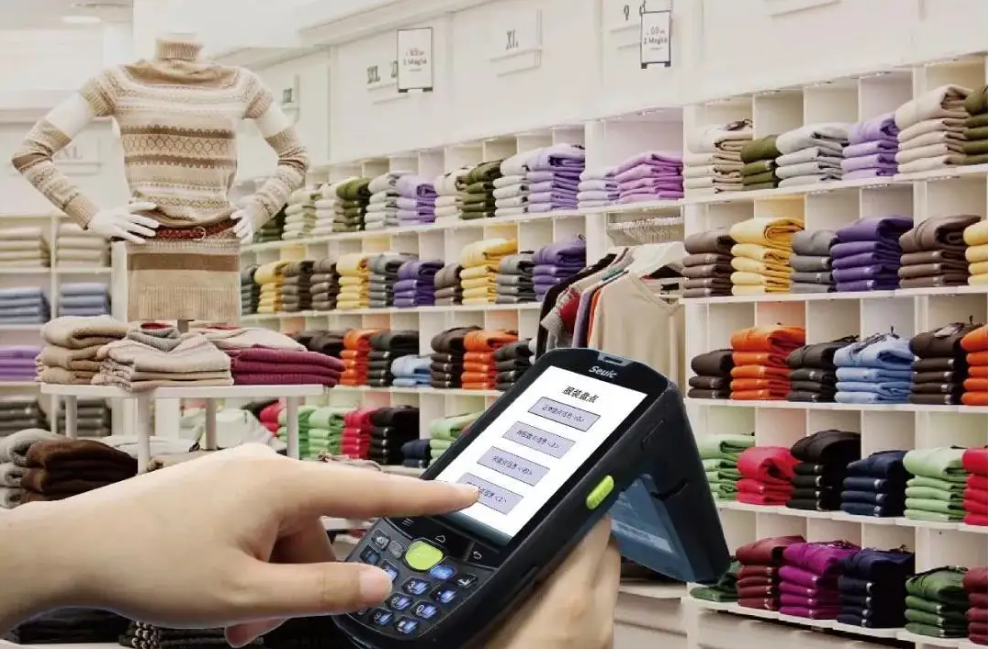
The application of RFID technology will change the traditional warehousing management work way, through RFID electronic tags and RFID handheld terminals for automated information collection. Thus realizing the goods data efficiently, accurately, real-time collection, and constantly improve the fabric warehouse operation efficiency.
RFID technology offers a powerful solution for enhancing information management in textile and garment enterprises. By enabling real-time tracking, reducing errors, and improving supply chain efficiency, RFID helps businesses optimize operations, cut costs, and boost productivity. As the industry evolves, adopting RFID can provide a competitive edge, ensuring better inventory control, faster logistics, and smarter decision-making. Investing in RFID today paves the way for a more streamlined and data-driven future in textile and apparel manufacturing.
Frequently Asked Questions
1.What are the key benefits of RFID for textile and garment businesses?
-
Real-time inventory tracking
-
Reduced manual errors and labor costs
-
Improved supply chain visibility
-
Faster production and logistics processes
-
Enhanced anti-counterfeiting and loss prevention
-
Automates stock counting, reducing human errors
-
Provides instant updates on stock levels
-
Helps track raw materials, work-in-progress, and finished goods
-
Enables quick location of items in warehouses
-
While initial costs may be higher than barcodes, RFID reduces long-term operational expenses.
-
ROI is achieved through labor savings, reduced stockouts, and improved efficiency.
-
Scalable solutions are available for different business sizes.
-
Upfront investment in tags, readers, and software
-
Integration with existing ERP/WMS systems
-
Training staff to use RFID technology effectively
-
Ensuring RFID tag durability on fabrics and garments
-
Yes, RFID tags provide unique identification, making it harder to duplicate products.
-
Retailers can authenticate items and track suspicious movements.
-
Reduces shrinkage (theft, misplacement) in warehouses and stores.
-
RFID: No line-of-sight needed, bulk scanning possible, more durable, stores more data.
-
Barcodes: Cheaper but require manual scanning, prone to damage, slower for large inventories.
-
Washable RFID tags (for uniforms and reusable garments)
-
Soft fabric tags (sewn into labels for minimal discomfort)
-
UHF RFID tags (longer read range, ideal for warehouse tracking)
-
Reduces waste by improving inventory accuracy.
-
Supports circular fashion by tracking reusable/recyclable items.
-
Minimizes overproduction through better demand forecasting.
Categories
Latest News
Contact Us
SEIKO RFID TECHNOLOGY LTD.
Add: Rm.7127, No.350, Changle Rd., Huli District, Xiamen 361006, China.
Tel: 0595-22586002
Email: sales@seikorfid.com
Phone: +86-18559272337 (WhatsApp)